How Automotive Technician Jobs Differ When It Comes to Electric Cars
Electric vehicles (EVs) are rapidly changing the automotive industry, reshaping the daily responsibilities of automotive technicians and driving demand for specialized electric car mechanics. As more drivers choose environmentally conscious transportation and manufacturers expand EV production, technicians trained in modern EV technology are in high demand.
NYADI The College of Transportation Technology in Jamaica, New York, provides hands-on training programs that prepare students for the evolving needs of the auto industry. Here, we explore how traditional auto technician jobs are different from electric car mechanic roles.
Key Takeaways
- EVs require fewer mechanical repairs than gas-powered vehicles, increasing the demand for technicians skilled in electrical and diagnostic systems.
- EV industry growth creates strong career opportunities for technicians who pursue specialized EV mechanic roles.
- NYADI offers training programs to help prepare students for traditional and EV mechanic careers.
What Is an Electric Car Mechanic?
An electric vehicle runs on a battery‑powered motor instead of a gasoline engine. EVs may be fully electric or hybrid models that pair an internal combustion engine (ICE) with an electric battery. While EVs include fewer moving parts than gas-powered vehicles, they still rely on complex electrical, software, and safety systems. Electric-vehicle mechanics (EV technicians) are needed to work on the complex parts of EVs, including:
- High‑voltage battery systems
- Regenerative braking components
- Onboard chargers and charging ports
- Power inverters and converters
To work safely on EVs, technicians may pursue specialized credentials, such as the Automotive Service Excellence L3 (Light Duty Hybrid/Electric Vehicle Specialist), which is increasingly sought after by employers in the automotive technology field. These types of credentials signal to future employers that students are certified to work on and operate EVs.
Contrasting Differences: Electric Car Mechanics vs. Traditional Automotive Techs
As the automotive industry transitions toward EVs, technicians are experiencing major shifts in training requirements, job responsibilities, and long‑term career opportunities. If you’re interested in becoming an EV technician, it’s helpful to understand some of the differences between electric vehicle and traditional mechanic jobs. They include:
Scope of Work
EV technicians handle fewer moving parts compared to standard auto techs, focusing on electrical components, battery diagnostics, thermal‑management systems, and software‑based troubleshooting. They may repair faulty batteries, operate battery‑health diagnostics, download software updates, test for voltage inconsistencies or thermal imbalance, and more.
Meanwhile, traditional mechanics work with many moving parts of internal combustion engines. They often maintain gas engines, change oil, repair exhaust systems, provide transmission services, and more.
Job Tools
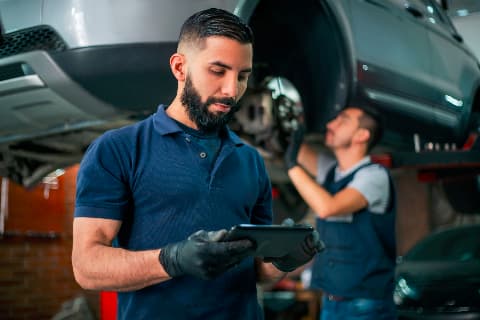
Electric car mechanics work with advanced digital tools to provide service procedures that aren’t part of standard internal combustion engine (ICE) repair. They typically use more technology, such as laptops and diagnostic software, compared to standard auto techs, who focus more on mechanical repairs.
Certification and Training
EV batteries operate at high voltage, so this work requires specialized training and strict adherence to safety protocols. EV technicians require advanced training and often pursue ASE certifications specific to EVs, while standard technicians pursue ASE A-series certifications focused on engine performance, manual transmissions, and electrical systems for ICE vehicles.
Salary and Advancement Opportunities
In New York, EV technicians earn an average of $64,441 per year, while standard auto technicians earn $63,250 annually. Both offer competitive earning potential and the ability to increase wages by gaining experience, pursuing advanced certifications, and changing work environments. Both standard auto techs and EV techs can advance their careers through additional training and certification. For EV techs, they can go on to become EV technical instructors or EV service managers. Auto technicians can specialize in other areas like electric vehicles, diesel engines, and more.
Prepare for a Career in Automotive Technology at NYADI
If you’re considering an automotive career, whether it’s as an electric car mechanic or a standard auto technician, NYADI’s training programs can teach you the skills you need. Our Automotive Technology program provides a strong foundation in automotive technology, preparing students to diagnose, service, and repair increasingly advanced vehicles, including EVs.
At NYADI, we also offer small class sizes, professional instructors, and financial aid opportunities for qualified students. Our career services and industry partnerships help students find electric car mechanic roles. To learn more about the future of EV technology or the difference in various automotive roles, contact us today.
FAQ About Electric Car Mechanic Roles vs. Traditional Auto Tech Jobs
What automotive technician jobs are most affected by the rise of electric cars?
Traditional automotive technician roles focused on engines, transmissions, fuel systems, and exhaust components are most affected, as EVs eliminate many of these systems and require far less mechanical maintenance.
What are the biggest challenges EV technicians face?
The largest challenge EV technicians face includes working safely around high‑voltage systems, which pose risks, such as shock, thermal hazards, and arc flash if mishandled.
How can you become an EV technician from a standard auto technician?
To become an EV technician from an auto technician, you’ll need to gain specialized knowledge in high-voltage systems, battery technology, and electric motors through certifications like ASE and hands-on experience.